
Helpful Tips
A to Z Wildlife Control
Keep Your Lawn Beautiful With Our Mole and Vole Removal
When the snow melts in spring, many homeowners discover unexpected lawn damage. Dirt mounds and thumb‑width surface tunnels can appear across the yard, creating a pattern that looks almost like a jigsaw puzzle. If moles are to blame, A to Z Wildlife Control can provide fast, effective removal. A proper assessment is the first step, helping us identify the true cause of the damage and develop a safe, targeted plan to remove the animal responsible.
Let Us Help You Get Rid of Voles
Voles are herbivores that feed on green grass and plants during the summer and switch to roots, bulbs, and seeds in the winter. They stay active day and night throughout the year. These small rodents are brown or dark gray to black, measure about 3½ to 5 inches long, and have small eyes with a short tail. Common signs of vole activity include narrow, well-worn runways in your yard or garden with thumb-sized holes, and you may notice freshly cut grass stacked along these paths.
Voles reproduce quickly, having 3 to 10 pups as many as 15 times per year, and typically live 1 to 2 years. As snow melts in the spring, they often retreat under cement slabs, sidewalks, and patios. They also tunnel along buildings and frequently burrow beneath AC units. Mulched flower beds are especially appealing to them.
Keep Your Yard Free of Moles
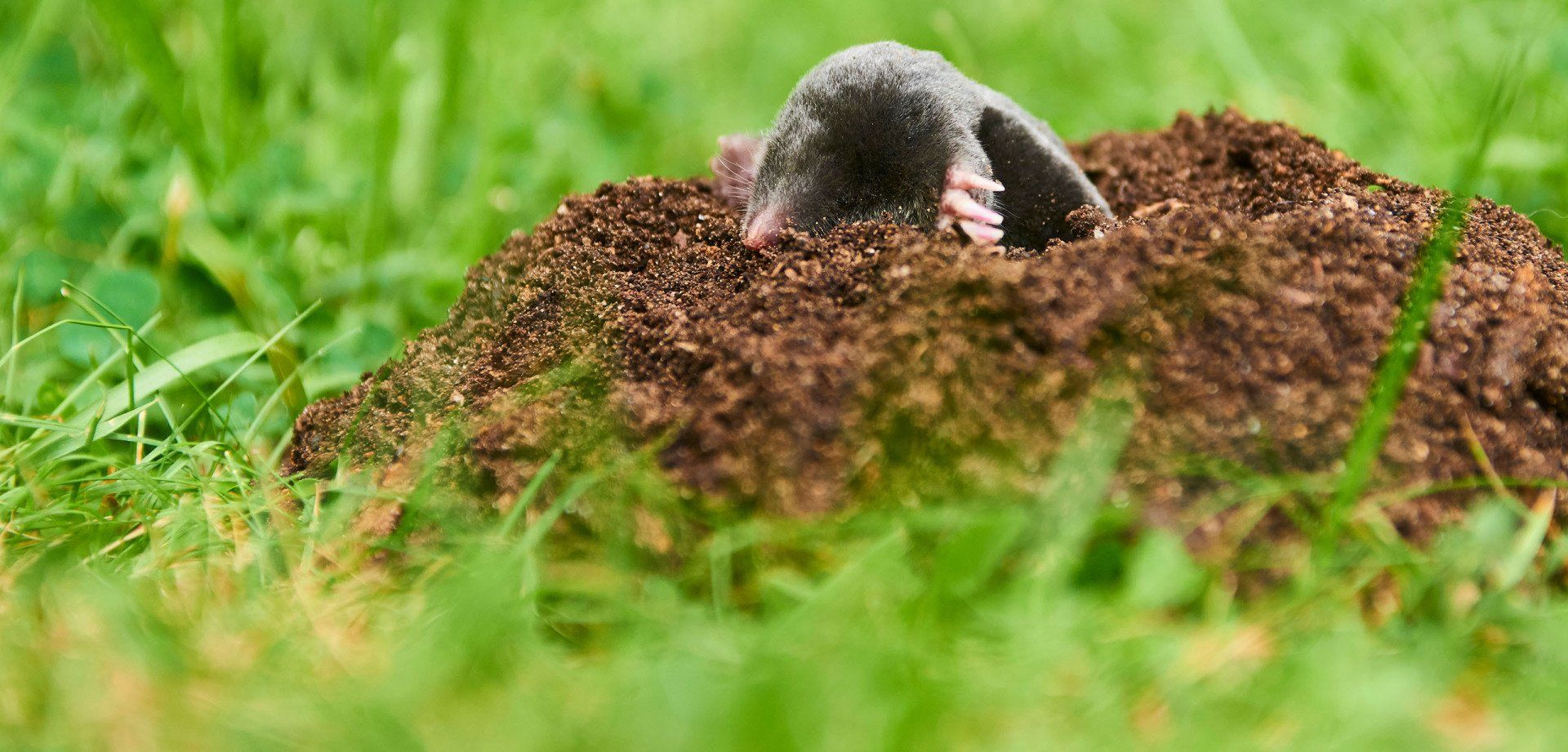
In Michigan, two mole species are common: the star‑nosed mole and the eastern mole. The star‑nosed mole measures about 3 to 7 inches long, has dark gray to black fur, and is easily recognized by the ring of 20 or more thin, fleshy pink projections on its nose, along with a long tail. Signs of star‑nosed mole activity include raised ridges from surface tunneling and small mounds of fresh soil, often with visible runways leading to and from ground openings. These moles are insectivores that primarily eat slugs and earthworms. They have 3 to 7 offspring once a year, typically in April or May, stay active day and night year‑round, and spend more time above ground than eastern moles.
The eastern mole is larger, about 4 to 7 inches long, with short dark brown to gray fur and a slight silver sheen. It has a long pointed snout and broad, naked front feet designed for digging. Signs of eastern mole activity include 3‑ to 4‑inch‑wide tunnels, some running long distances without visible holes. Dirt piles or mounds may also appear as they create deeper, permanent tunnels. Eastern moles are active day and night year‑round and spend about 99 percent of their lives underground. Their shallow surface tunnels are temporary feeding paths, while deeper networks are used for nesting and daily living. Earthworms make up most of their diet—about 80 to 85 percent—along with insects and grubs. They produce 2 to 6 offspring once a year in early spring.

